An All-Women Research Cruise to Antarctica
In January and February 2026, I joined an all-women research team aboard the R/V Sikuliaq for a five-week cruise to the Weddell Sea, Antarctica — and brought my PhD student, Rose Malanga, along with me.
The project, LIMBOW (Linking Ice Melt to Biogeochemistry and Organisms in the Weddell), was funded by the National Science Foundation to study how summer sea ice melt affects the biogeochemistry and ecology of the Weddell Sea. Our team included Maggi Mars-Brisbin (University of South Florida), Tricia Thibodeau and her student Hailey Thomas (University of New England), Rose, and me, joined by professional French hornist Kyra Sims through NSF’s Polar STEAM program, who recorded the sounds of the ice and ocean for a future musical composition.
Getting there wasn’t simple. The team was originally slated to join NSF’s chief scientist training program on a different ship in 2024, but that cruise was cancelled shortly before departure due to mechanical issues, and the vessel later assigned to this trip fell through as well. NSF ultimately arranged for the R/V Sikuliaq — normally based in Alaska — to sail us out of Punta Arenas, Chile, starting January 11. Sea ice near Seymour Island turned out to be much thicker than expected, and the ship got stuck for several days before conditions allowed us to break free.
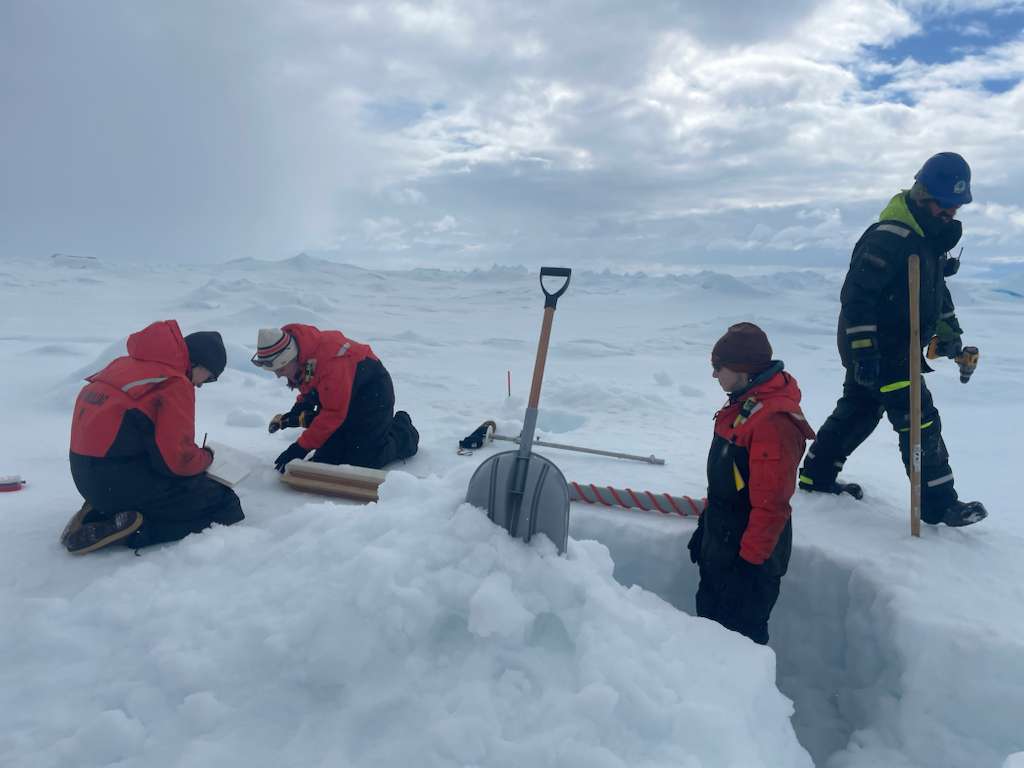
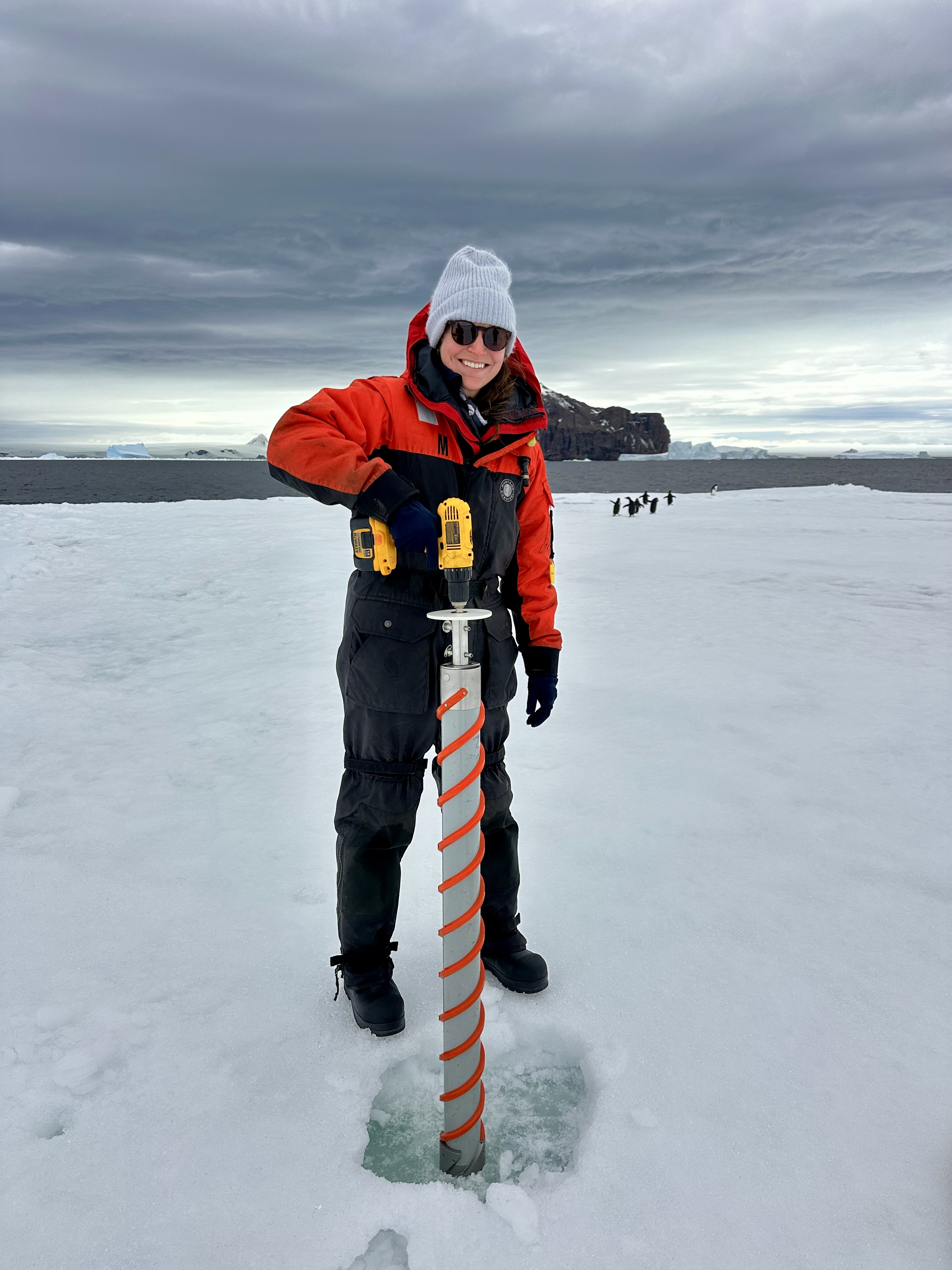
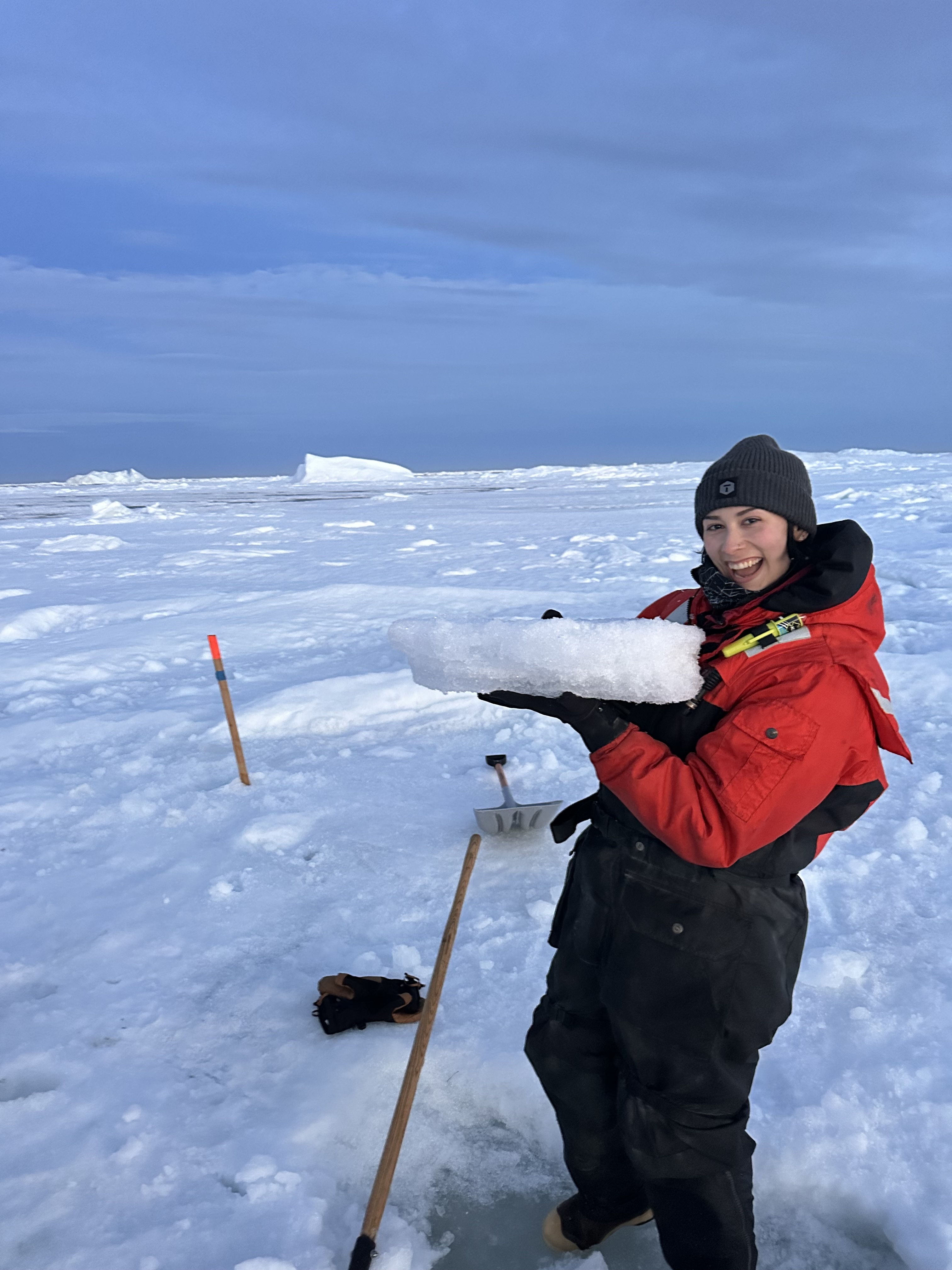
Once underway, a typical station involved an ice station (snow pit plus temperature and salinity cores), a CTD cast, and zooplankton net tows. Over the course of the cruise, the team completed 8 ice stations, 22 CTD casts, and 44 zooplankton tows. My focus was on collecting ice samples to look at the organisms, nutrients, and isotopes present, to help track how sea ice meltwater moves through the water column, along with physical and remote measurements of the ice itself.
It was my first sea-going fieldwork, and the first time I saw a melt pond on Antarctic sea ice in person rather than in satellite imagery. As I told Sierra Magazine: “You can see in so many different papers that people just assume that melt ponds on Antarctica don’t exist and don’t occur, so seeing the surface melt was really rare and exciting.”
We wrapped up the cruise with a stop at Palmer Station before a rougher crossing back through the Drake Passage, arriving in Punta Arenas on February 14.
You can read more about the trip from the Society for Women in Marine Science and Sierra Magazine.